Christ is risen!  He has provided us with a fresh start, and I cannot think of a better gift.  Easter has always been my favorite time of the year.  It usually falls around the start of spring when the world around us becomes alive again.  The tree leaves return, the grass turns green, and the flowers grow.  Animals come out of hibernation, babies are born, and the sun starts to shine a little more.  It is a season of fresh starts that God scheduled to happen a long time ago.


In January we celebrate the start of a new year by making resolutions.  These resolutions are a promise we make to ourselves to improve.  Who among us has followed thtough with rthese resolutions?  By this time of the year, I have long forgotten my resolutions, but God has never forgotten the promise He made to us.  That promise came at Easter.  God promised us that no matter how we mess up, He is going to forgive us.  All we have to do is confess our sins and accept Jesus in our heart.  The love God has for us is so strong.  He was willing to sacrifice His one and only Son so we can have forgiveness and a fresh start.


It makes me think about what I am doing with all the fresh starts God has provided.  I always told my son when he was little that saying sorry did not have as much meaning if the mistake he made was repeated.  God continually forgives and provides a fresh start, but it is our responsibility to take the next steps.  What are you doing with your fresh starts?  There is so much we can be doing to help God's world be a better place.  Jesus spent his time on this Easrth showing us how to do this.  Love one another as He has loved you.  Be kind to people and take care of the Earth.  God has made us caretakers of the world we live in and everything in it.  So, I challenge you to take one of your fresh starts and do something to better God's Earth.  Make it a better place for all of us.


Blessings,


Heather Stone, Consistory President

 

A MESSAGE

FROM THE PRESIDENT

OF ST. MARK'S

CONSISTORY


MAY

2026


"No matter who you are or where you are on life's journey,

you are always welcome here."


ADVENT/CHRISTMAS

INTRODUCTION

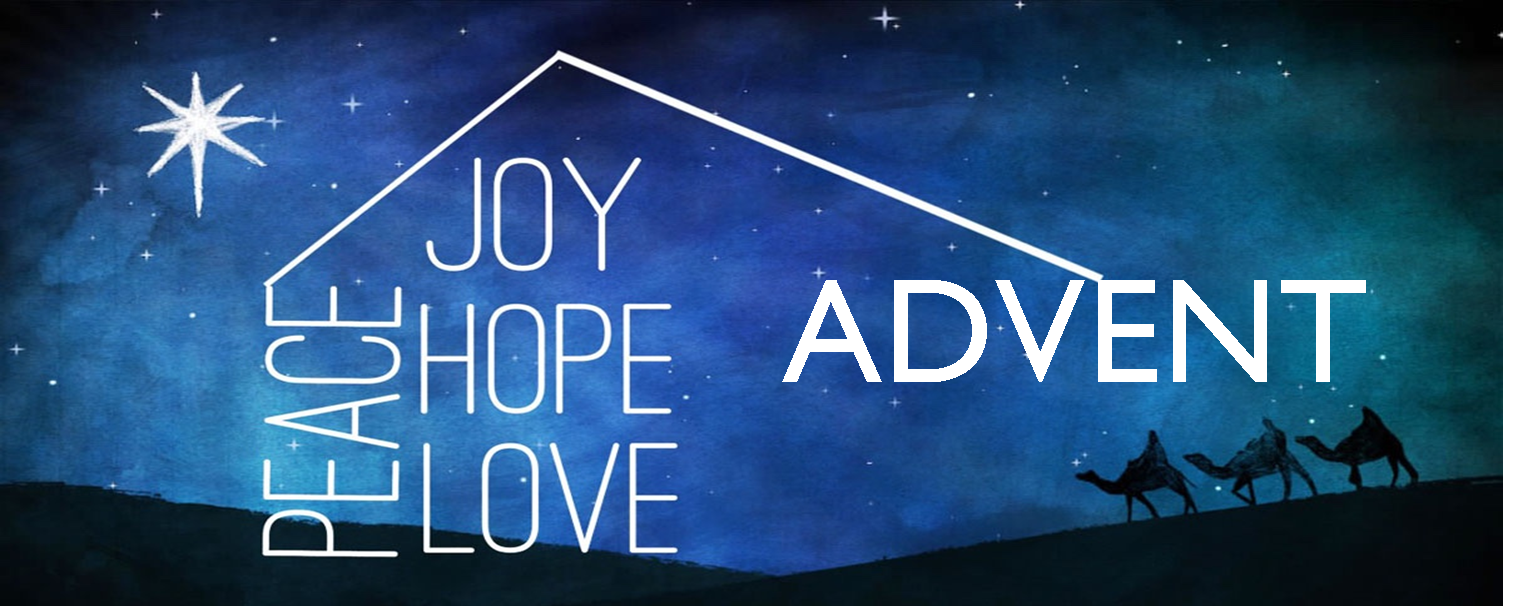
As the days grow shorter, we enter a period of waiting and preparation.  This is the season of Advent in which we await the coming birth of Jesus.  Advent is also the first season of the liturgical year and is a joyous and hopeful season in the church year.  The season of Advent begins on the fourth Sunday prior to Christmas Day.  The actual season of Advent can last from 22-28 days.  When Christmas Eve falls on a Sunday, it is the last Sunday of Advent.


The word advent comes from the Latin term "adventus" meaning "arrival" or "coming," particularly the coming of something having great importance.  Advent is both a time of joy-filled celebration of the birth of the Lord and a preparatory period for meditation.


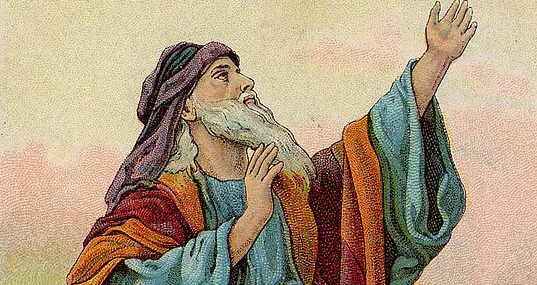
Although not specifically mentioned in the Bible, Advent is inspired by scripture.  The prophet Isaiah mentioned numerous times the prophecy of the birth of Jesus.


ISAIAH 7:14 (NIV)

Therefore, the Lord himself will give you a sign:  The virgin will conceive and give birth to a son, and will call him Immanuel.


ISAIAH 9:6-7 (NIV)

"For unto us a child is born,

to us a son is given,

and the government will be on his shoulders.

And he will be called

Wonderful Counselor, Mighty God,

Everlasting Father, Prince of Peace.

of the greatness of his government and peace

there will be no end.

He will reign on David's throne

and over his kingdom,

establishing and upholding it

with justice and righteousness

from that time on and forever.

The zeal of the Lord Almighty

will accomplish this."


ISAIAH 11:1 (NIV)

"A shoot will come up from the stump of Jesse; from his roots a Branch will bear fruit."


Isaiah foretold the birth of Jesus centuries before it occurred.


THE ORIGINS OF ADVENT

It is believed that Advent began sometime after the 4th Century as a time of preparation for Epiphany.  Epiphany celebrates the visit of the wise men.

Later in the 6th Century, Advent came to be associated with the coming of Jesus.

By the Middle Ages, four Sundays had become the standard of the Advent season.


ADVENT SYMBOLS AND CUSTOMS

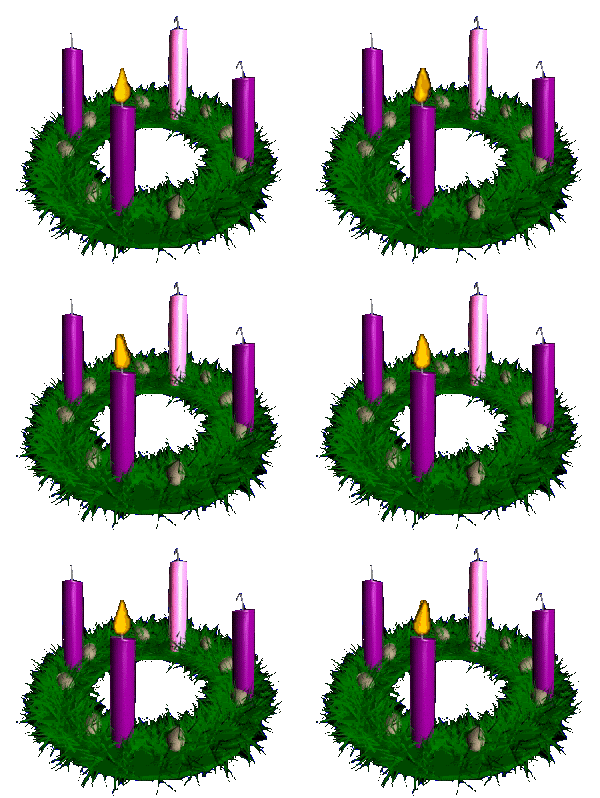
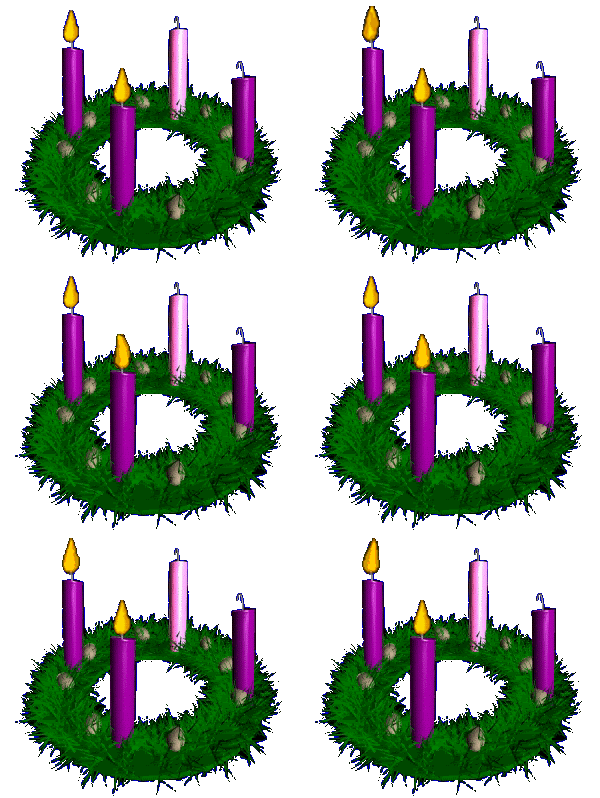
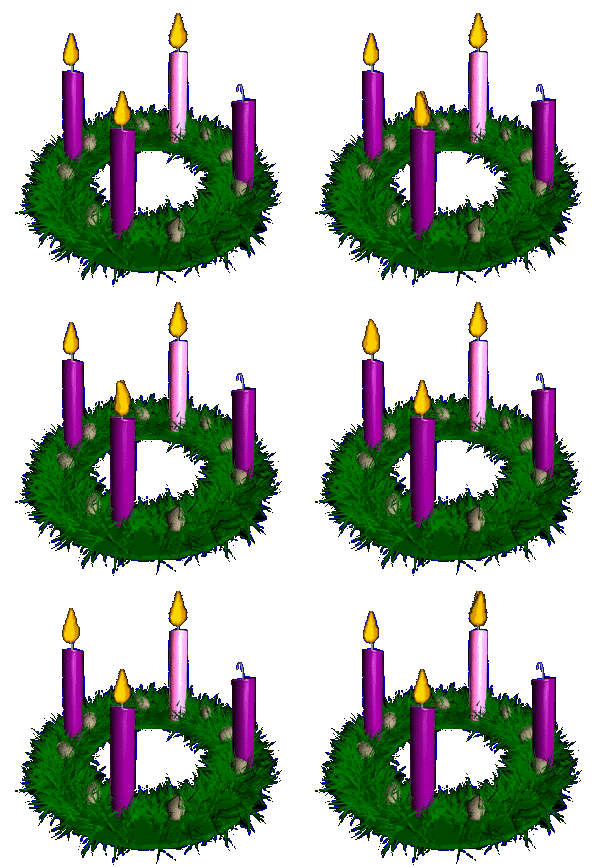
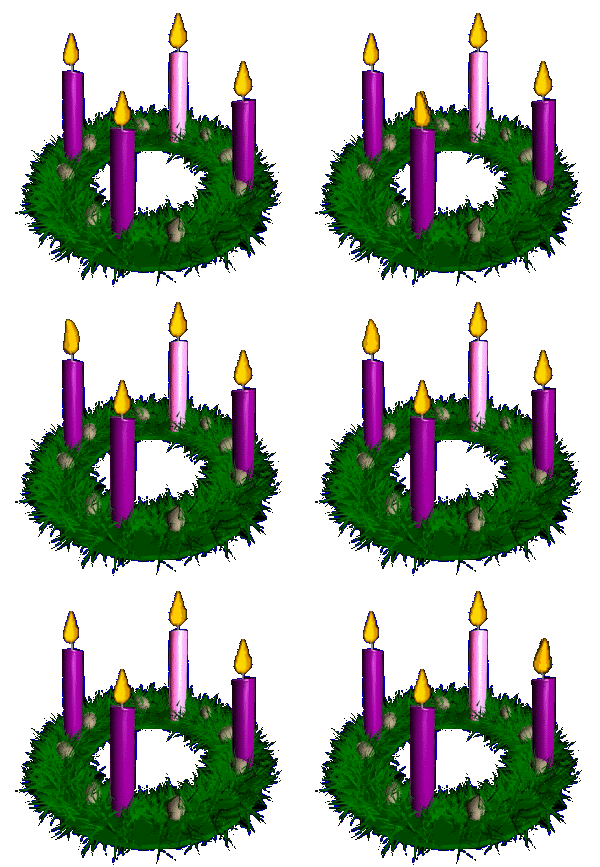
Perhaps one of the most important Advent symbols and customs is the Advent Wreath.  The Advent Wreath is a common symbol of the liturgical season.  Lighting an Advent Wreath is a custom that began in sixteenth-century Germany.  The Advent Wreath is a circle of evergreen branches or garland with four or five candles arranged on the wreath.  During the season of Advent, a candle on the wreath is lit each Sunday as a part of the Advent service.  The traditional Advent Wreath consists of three dark blue candles and one pink candle set in the wreath.  Often a single, larger white candle is placed in the center of the wreath.

The color of the Advent candles serve as a way to light the way to the birth of Jesus.


THE THEMES OF THE FOUR SUNDAYS OF ADVENT

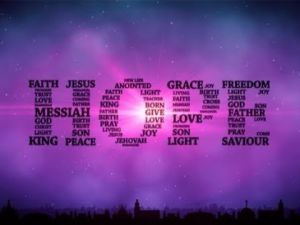
The first dark blue candle on the Advent Wreath symbolizes HOPE -- the first Sunday of Advent leads us to anticipation of the birth of Jesus.  Sometimes called the "Prophecy Candle" this candle reminds us of Isaiah's foretelling the birth of the Christ Child and that all of the promises God gave us in the Old Testament would be fulfilled the Christ Child's birth.

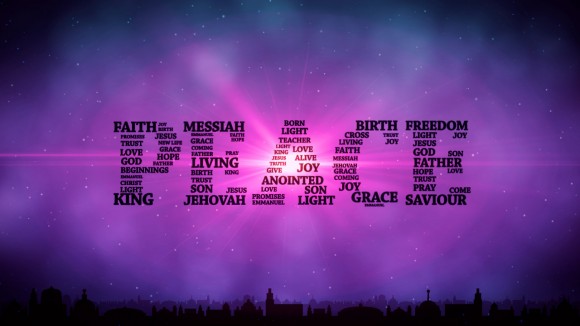
The second dark blue candle on the Advent Wreath symbolizes PEACE -- the second Sunday of Advent.  It is sometimes referred to as the "Bethlehem Candle" and reminds us of the journey of Joseph and Mary from Nazareth to Bethlehem before she gave birth to the Christ Child.  The candle also reminds us that after division, destruction, abd dispersion of the kingdom in the Old Testament, there might be peace on Earth.

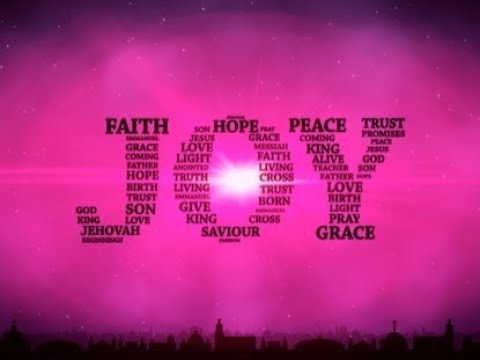
The third candle (pink) of Advent symbolizes JOY -- the third Sunday of Advent.  Sometimes the candle is referred to as the "Shepherd's Candle."  As we approach Christmas, our joys grows and takes us back to the joyful anticipation of the shepherds who travelled to see the Christ Child inthe town of Bethlehem.

The fourth candle (dark blue) symbolizes LOVE -- the fourth Sunday of Advent.  The candle is sometimes referred to as the "Angel's Candle."  The candle represents the ultimate love of God that he might send his only Son for us and leads us to eagerly await the New Kingdom of God on Earth.  It also reminds us  of the message of the angels on the first Christmas -- "Peace on Earth, Good Will Toward Men."


The white candle in the middle of the Advent Wreath is lit on Christmas Eve.  It is called the "Christ Candle."  The candle represents the life of Christ and symbolizes purity.